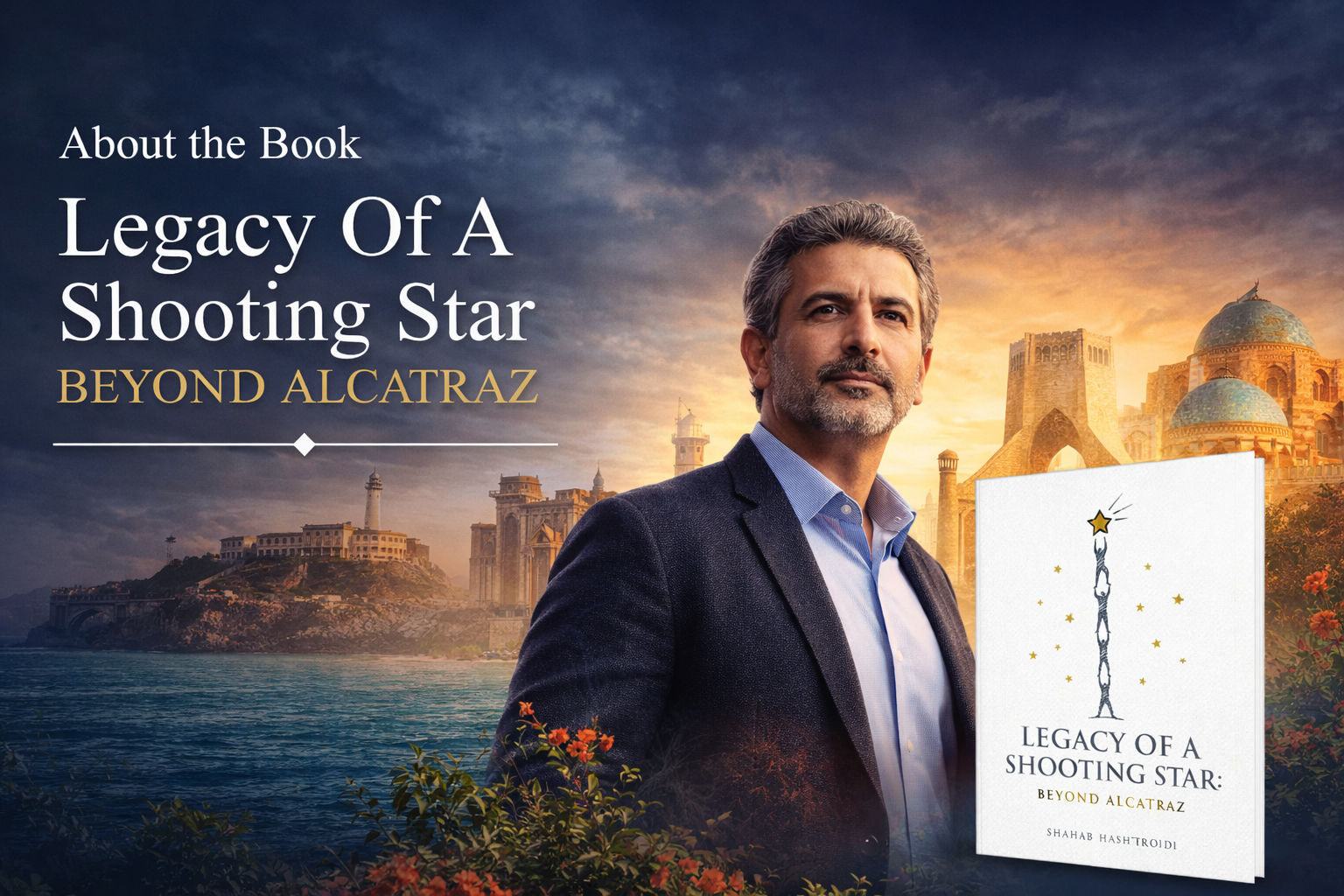
Shahab Hashtroudi’s memoir, “Beyond Alcatraz: Legacy of a Shooting Star”, begins with his vibrant life as a successful entrepreneur in Tehran, only for it to be overturned by a shocking twist of fate and injustice that sees him in a stark British prison. Stripped of his liberty, Shahab is forced to confront not only his immediate reality but also the weight of his family’s complex Iranian legacy—a history marked by revolution, resilience, and survival.
“Beyond Alcatraz: Legacy of a Shooting Star”: A Journey into Memory, Violence, and Redemption
Within the confines of his cell, Shahab’s reflections turn inward. He grapples with deep questions of identity, belonging, and dignity, drawing strength from memories of his homeland and the enduring spirit of his ancestors. Each recollection becomes both a source of pain and a wellspring of hope, fueling his determination to endure.
By threading together his personal struggles with the broader sweep of Iranian history, Shahab’s story becomes more than a memoir—it’s a testament to the power of resilience and hope. His journey shines as a reminder that even in the darkest times, the search for meaning and the will to persevere can illuminate a path forward.
Shahab’s message, “Beyond Alcatraz: Legacy of a Shooting Star,” is a journey to be savored like slow food. The reader should “let themselves go” as if floating down a river.
During his journey, reality and culture intertwine in an exploration of memory, trauma, and the possibility of redemption. Before anything else, Hashtroudi urges readers to first appreciate the depth and richness of the culture in Iran.
Exploring the Heart of Iranian Culture
Iran is a fabulous country steeped in history, reflected in its exquisite architecture and spectacular landscapes. Iranians are incredibly kind and hospitable, grateful for your visit, so it is easy to receive invitations to share a cup of tea or a meal—an experience that will leave a lasting impression on your journey through ancient Persia. Iran is a peaceful country that blends modernity with rich traditions.
Geographic Location
Located in Central Asia, Iran is bordered by the Caspian Sea to the north and the Persian Gulf and the Gulf of Oman to the south. Iraq, Turkey, Armenia, and Azerbaijan border Iran to the west and north, and Pakistan, Afghanistan, and Turkmenistan to the east. Iran is a vast country, situated mostly on a large plateau, and it boasts impressive deserts, such as the Lut Desert in Kerman Province. A true wonder of stone and sand, it will leave you in awe.
History
History and culture in Iran take us on a journey through the great conquerors of thousands of years ago who have left their mark on this fabulous country. From the Median Empire, through Cyrus the Great, to Alexander the Great and the arrival of Genghis Khan, civilizations have left behind vestiges and architectural styles that still evoke dreams of ancient Persia. Furthermore, Iran was a key stop on the most important trade route ever known. This route ran from East Asia to West Asia and Europe along the mythical Silk Road, which Marco Polo recounted in his travelogue, The Travels of Marco Polo. It was a golden age of trade that left its mark on Iranian cities like Bam and Yazd.
Architecture
Looking up at the Iranian sky reveals something that characterises its architecture: madrasas, minarets, and domes covered in a distinctive blue hue, typical of the region.
Architecture is a major part of culture in Iran, highly recognised by UNESCO, which has designated various sites and styles throughout the country as World Heritage Sites. Squares, palaces, mosques, archaeological sites, and cultural landmarks like Persepolis, the ancient capital of the Persian Empire, or incredible cities carved from mud brick, such as Yazd and Bam. Iran is a jewel brimming with diverse architectural styles that lend it breathtaking beauty.
The ancient city of Susa, the Parsagadas archaeological site, the historic Tabriz bazaar complex, the Jameh Mosque in Isfahan, the Lut Desert, the Golestan Palace, the ancient village of Meymand, steeped in rural traditions, the ancient inscription from the Achaemenid Empire at Bisotun… A long list that UNESCO has recognised for the cultural, historical, and natural richness of a country like Iran.
Understanding the Tapestry of Culture in Iran
For many centuries, Iran was a center of civilization. Many of its kings and rulers have gone down in history as great and illustrious thinkers. Cyrus II and Darius I, founders of the first Persian Empire in the 6th century BC, were considered paragons of wisdom and political genius.
Iran was the birthplace of Zoroaster, the founder of one of the world’s oldest religions, and also of thinkers such as Avicenna and Al-Farabi, Muslim philosophers whose translations of the Greek classics opened new doors for Western scholars. Visiting the Tehran Archaeological Museum is an excellent way to contemplate and discover the treasures left by various civilisations. But throughout Iran, there are numerous sites that are like open-air museums.
Shahab Hashtroudi’s Journey and the Cultural Legacy of Iran
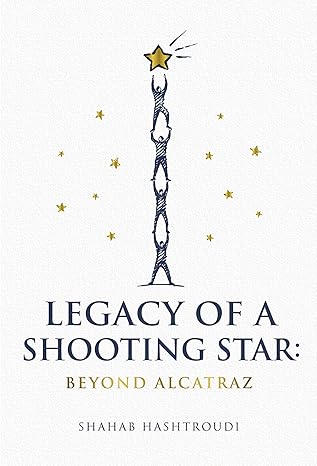
A country like Iran, which has witnessed the passage of the most powerful empires and the most refined cultures of its time, must necessarily preserve precious treasures from this history and be the repository of the best that each culture contributed to civilization and art. Thus, we have the legacy of the Sasanian Empire.
The Umayyad dynasty, which ruled from Damascus, assimilated Sasanian traditions, and their Abbasid successors, who moved their capital to Baghdad, in what is now neighboring Iraq, were profoundly influenced in their artistic expressions by Iranian concepts. By the 10th century, Iran was arguably the world’s leading center of literature, art, and science.
Although the 13th and 14th centuries brought the destruction and looting of numerous monuments by the Mongols, they also contributed to the best of their culture, introducing miniature painting to the country, a technique that was used to illustrate books. One of the most beautiful examples of illustration to survive to this day is the Book of Kings (Shahnameh). This technique later spread to Europe through the Arab conquerors.
Experience the Journey Yourself
“Beyond Alcatraz: Legacy of a Shooting Star” is a vivid, impactful, and engaging read. Shahab Hashtroudi’s narrative heightens the emotional stakes, capturing historical upheaval with both tragedy and hope. If you are intrigued by the depth of Iranian culture and personal resilience explored here, reading the book will offer you an even richer, unforgettable experience.